Look, when most people hear the word “prepper,” they picture some guy in the woods with a bunker full of canned beans and camouflage gear. But real preparedness — especially urban preparedness — looks very different.
Most emergencies that people actually face aren’t end-of-the-world scenarios. They’re things like power outages, supply shortages, storms, riots, job loss, or infrastructure failures. The truth is that modern systems are fragile, and when they break down even a little bit, everyday life gets difficult very quickly.
The goal of prepping isn’t fear. It’s independence.
You want the ability to take care of yourself and the people around you when the system stops working the way it normally does. And the good news is that you don’t need a bunker or thousands of dollars to start. What you need is the right priorities.
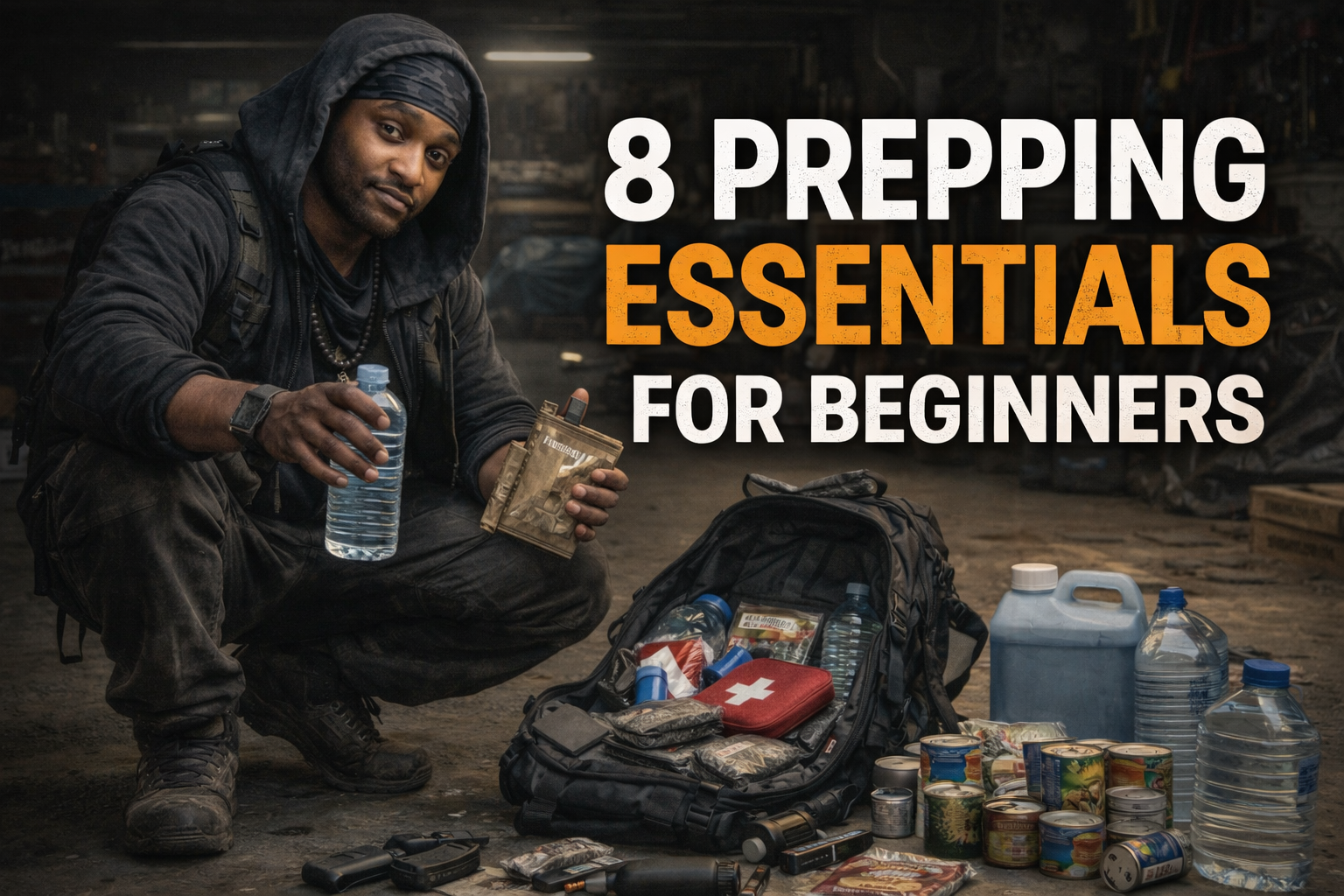
If you’re brand new to prepping, these are the essential items every beginner should start building into their survival setup first.
1. Water Storage (The Foundation of Survival)
Water is always the first step in preparedness. Everything in your life depends on it — drinking, cooking, hygiene, sanitation, and even basic comfort.
When disasters hit, water systems can fail faster than people expect. Pipes break during earthquakes. Floods contaminate water supplies. Power outages shut down treatment plants and pumps. And when that happens, stores run out of bottled water within hours.
That’s why the first thing every new prepper should focus on is building a reliable water supply at home.
A common preparedness guideline is storing at least one gallon of water per person per day. That covers drinking and basic sanitation. A two-week supply is a solid beginner goal, but even a few days of water storage puts you ahead of most people.
The easiest way to start is simple grocery store water jugs. They’re cheap, easy to stack, and immediately usable. Over time, many preppers upgrade to dedicated water containers, stackable water bricks, or larger storage barrels.
Another smart layer of preparedness is having a way to purify water if your stored supply runs out. Water filters, purification tablets, or even boiling water can make questionable water sources safer to drink.
Tip: Store water in multiple locations in your home instead of keeping it all in one place.
Why It Matters: Without water, survival becomes a race against time.
2. Long-Term Food Supply
Food security is the second major pillar of preparedness. Most households only have three to five days of food available before they need to shop again. If stores close or supply chains break down, that becomes a serious problem.
But here’s something a lot of beginners get wrong: prepping food doesn’t mean buying exotic survival rations right away.
The smartest way to start is simply stocking more of the food you already eat.
Canned goods, pasta, rice, beans, oats, peanut butter, soup, and shelf-stable snacks are all great survival foods. They last a long time, they’re easy to prepare, and they’re affordable.
One strategy that works well for beginners is called “deep pantry storage.” Instead of buying separate survival food, you just buy extra of your normal groceries and rotate them as you use them.
Eventually, many preppers expand into longer-lasting foods like freeze-dried meals or bulk staples like rice and beans stored in sealed containers.
Tip: Focus on foods that don’t require refrigeration and can be prepared with minimal cooking.
Why It Matters: Hunger weakens people physically and mentally, which makes every other problem harder to solve.
3. First Aid and Medical Supplies
Medical preparedness is one of the most overlooked areas for beginners. In normal life we rely heavily on hospitals, pharmacies, and emergency services. But during disasters those systems can become overwhelmed or inaccessible.
Even minor injuries can become serious problems when proper treatment isn’t available.
That’s why every prepper should own a well-stocked first aid kit.
A good kit should include bandages, gauze, antiseptic wipes, medical tape, gloves, antibiotic ointment, tweezers, scissors, and pain relievers. More advanced kits may include items like tourniquets, compression bandages, and burn treatment supplies.
It’s also smart to store extra prescription medications if possible and basic over-the-counter medicine for things like allergies, fever, and stomach illness.
Medical preparedness isn’t just about gear — knowledge matters too. Learning basic first aid and CPR dramatically increases your ability to respond to emergencies.
Tip: Keep one first aid kit at home and another smaller kit in your vehicle or go-bag.
Why It Matters: Injuries are extremely common during disasters and accidents.
4. Emergency Lighting
When the power goes out, darkness becomes a serious problem. People underestimate how disorienting and dangerous a blackout can be until they experience one.
Flashlights and lanterns are essential pieces of preparedness equipment. They allow you to move safely through your home, perform tasks at night, and maintain a sense of normalcy during power outages.
Every prepper should own multiple light sources. Flashlights are great for mobility, lanterns provide room lighting, and headlamps allow you to work hands-free.
Battery-powered lights are the most common, but some people also keep solar lanterns or rechargeable lights as backup options.
Candles can work in emergencies, but they should be used carefully due to fire risk.
Tip: Store flashlights in multiple rooms so you can reach one quickly during a sudden blackout.
Why It Matters: Light restores control during chaotic situations.
5. Backup Power and Charging
In modern life, electricity powers almost everything. Phones, communication systems, cooking equipment, lighting, and even water infrastructure often depend on electricity.
That’s why having backup power sources can make a huge difference during emergencies.
The easiest starting point is portable power banks for charging phones and small electronics. These are inexpensive and can keep your phone running for several days.
Some preppers also invest in larger portable battery systems or solar generators that can power lights, laptops, or small appliances.
Solar charging systems are particularly useful because they allow you to recharge devices even when the grid is down for extended periods.
Tip: Keep at least one fully charged power bank stored in your emergency kit.
Why It Matters: Communication and information can be critical during emergencies.
6. Basic Tools and Multi-Tools
In a crisis, small problems can quickly become big problems if you don’t have the right tools to fix them.
That’s why every prepper should own a reliable multi-tool or basic toolkit.
Multi-tools combine pliers, knives, screwdrivers, and other tools into one compact device. They’re incredibly useful for quick repairs and everyday tasks.
In addition to a multi-tool, it’s helpful to keep basic household tools like a hammer, adjustable wrench, screwdriver set, and duct tape.
These tools allow you to secure broken doors, repair equipment, shut off utilities, and handle many unexpected problems.
Tip: Keep a dedicated tool kit for emergencies so you’re not scrambling to find tools when something breaks.
Why It Matters: Tools turn helpless situations into manageable problems.
7. Personal Safety and Home Security
Unfortunately, disasters can sometimes lead to increased crime and unrest. When systems fail and people panic, some individuals take advantage of the situation.
Preparedness includes thinking about personal safety and home security.
This doesn’t necessarily mean turning your home into a fortress. Often the most effective strategies are simple: good situational awareness, strong door locks, security lighting, and clear evacuation plans.
Self-defense training is also a valuable skill for urban survival. Martial arts, situational awareness training, and basic personal safety habits can make a significant difference in dangerous situations.
Tip: Prevention and awareness are usually more effective than confrontation.
Why It Matters: Safety should always be your first priority in any emergency.
8. Emergency Go-Bag
Sometimes the safest option during a disaster is leaving quickly. Wildfires, chemical spills, riots, or evacuation orders can force people out of their homes with very little warning.
A go-bag is a backpack filled with essential supplies that you can grab and take with you in minutes.
A basic go-bag should include water, energy bars, a flashlight, spare batteries, phone charger, small first aid kit, copies of important documents, hygiene items, and a change of clothes.
Some people also include emergency blankets, multi-tools, and personal defense items depending on their situation.
Tip: Store your go-bag near the front door so you can grab it quickly.
Why It Matters: Speed can save your life during fast-moving emergencies.
Final Thoughts
One of the biggest misconceptions about prepping is that you need to build the perfect survival setup overnight. That’s not realistic — and it’s not necessary.
Preparedness is about building layers of resilience over time.
Start with water.
Then add food.
Then medical supplies.
Then tools, power, and security.
Each small step increases your independence and reduces your vulnerability to disruptions.
And one day you’ll realize something important: if something unexpected happens tomorrow — blackout, storm, supply shortage — you won’t be panicking like everyone else.
You’ll already be ready.
And that’s what being an Urban Warrior is really about.
Call to Action
If you want to keep sharpening your survival mindset:
Download this episode on Spotify so you can listen while training or commuting.
Join the Urban Warrior Survival Discord and connect with other people who are building real-world survival skills.
And sign up for the Urban Warrior Survival newsletter to get the Urban Survival Checklist, a practical guide designed to help you start thinking like a survivor in a modern city environment.
Because surviving the future isn’t just about gear.
It’s about mindset, preparation, and thinking differently than everyone else.
Freedom Isn’t Given… It’s Built
Look, at the end of the day nobody is coming to save you.
Not the government.
Not the banks.
Not your job.
And definitely not the system that benefits from you staying dependent on it.
Real freedom comes from building your own skills, your own income, and your own tribe.
That’s what this whole Urban Warrior Survival movement is about.
Not fear.
Not panic.
Preparation.
Because the more self-reliant you become, the less power broken systems have over your life.
And that’s exactly what we’re building here — a tribe of people who refuse to live like domesticated house pets waiting for permission to survive.
So if this article helped you think a little differently, here’s what you should do next.
First, subscribe to the FREE Urban Warrior Survival E-Magazine on the website. Every month I send out survival strategies, preparedness guides, and self-reliance tools that I don’t always post publicly.
If you want to go deeper and support the mission, join the Patreon where I share exclusive content, behind-the-scenes strategy, and extra survival resources.
If you’re serious about building community, join the Discord and connect with other Urban Warriors who are learning to become more self-reliant together.
And if you want to hang out live, talk survival scenarios, preparedness strategy, and sometimes even break down things like zombie outbreaks, alien invasions, and real-world disaster situations — come catch the livestreams on Twitch.
Because survival isn’t meant to be done alone.
We’re building a tribe here.
And if you’re ready to stop depending on a failing system and start becoming the kind of person who can handle whatever the future throws at you…
Welcome to the pack.
— Broderick
Urban Warrior Survival 🐺