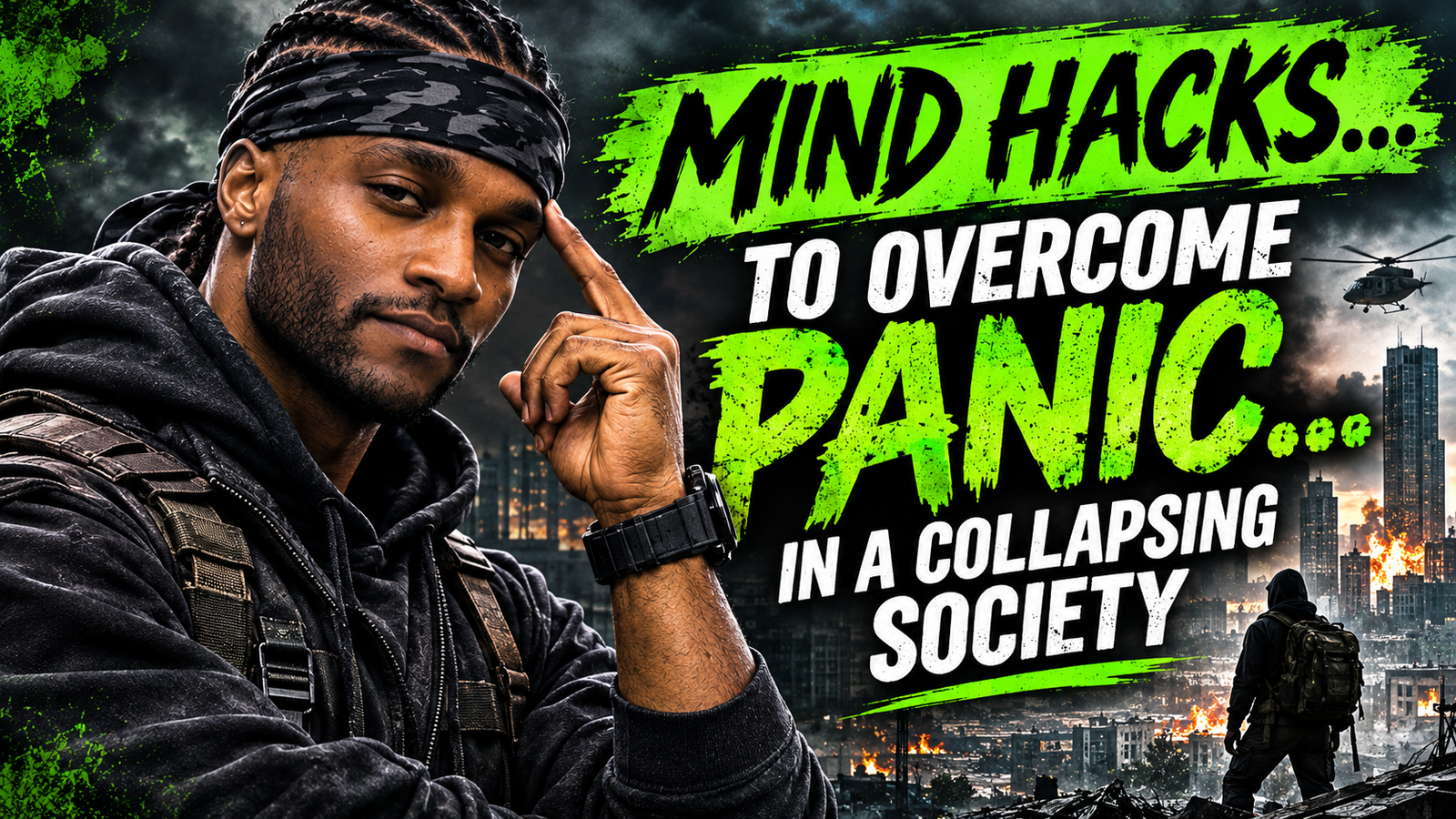
Today I’m completely decoding the 8 Best Rules for Mental Survival When Times Get Tough.
When you look at modern emergency preparedness, the mainstream conversation usually stops at stocking up on canned food or throwing a tactical flashlight into a drawer. But real, functional self-reliance is a full-scale lifestyle layout, and your psychological perimeter is the most critical piece of that grid. If you lack the cognitive wherewithal to hold your ground when a crisis strikes, all the gear in the world won’t save you. An urban grid failure or a societal shift isn’t just an inconvenience—it’s an immediate operational challenge to your mental safety.
If you’re ready to stop outsourcing your brain cells to a system built to keep you vulnerable, escape the matrix and pull up to my site at UrbanWarriorSurvival.com right now. Secure your free premium E-Magazine, survival checklists, and tactical blueprints straight to your device before the screens go dark. Let’s look at the angles.
Decoding the Trap
Mainstream society mistakes comfort for security. The average person operates on the assumption that the status quo is permanent, leaving them psychologically fragile when the infrastructure flatlines.
- The Illusion of Certainty: Modern life has conditioned brains to expect instant gratification and endless convenience. When the logistics freeze, the collective psyche drops into instant withdrawal.
- The Panic Contagion: Mainstream crowds feed off each other’s anxiety. When social media algorithms and breaking news alerts start screaming, panic spreads faster than any biological threat.
- The Overthinker’s Freeze: People show up 15 minutes late to their own survival because they waste critical seconds overanalyzing the disaster. Intelligence becomes self-sabotage when it stops you from making a decision.
The Reality Check Pillars
1. Accept Reality Immediately
Stop wishing things were different. The moment a crisis initiates, the old world is gone. Denying the severity of a situation wastes the precious minutes you need to secure your immediate zone. Accept the bad hand you’ve been dealt so you can start playing it effectively.
2. Create a 15-Minute Buffer
When it’s time to show up, you either show up early, on time, or late. Apply this to your mental processing. Train yourself to create a small gap between an unexpected shock and your actual response. Do not immediately react to fear. Step back, breathe, and analyze the terrain before moving.
3. Focus Strictly on the Immediate Perimeter
You cannot control the macro system, but you can control your direct environment. When the grid goes down or a crisis scales out, narrow your focus. Shrink the battlefield to what is right in front of you—your family, your resources, your physical boundaries.
4. Protect Your Attention Array
Cut off the noise. The attention economy is engineered to keep you frantic. In a worst-case scenario, turn off the speculative commentary, ignore the hyperventilating crowds, and only pull down raw, verifiable telemetry. Who owns your mind when you aren’t paying attention?
5. Maintain Your Physical and Mechanical Routines
Mental survival is tethered to your physical capability. Do not stop moving. If your daily baseline includes intense circuit training, heavy bag routines, or defensive conditioning, maintain those repetitions. A functioning, disciplined body forces a chaotic mind back into alignment.
6. Categorize the Variables
Sort your stressors into three distinct columns: the things you control, the things you can influence, and the things you must endure. Throwing cognitive energy at macro infrastructure failures or institutional decisions is a direct depletion of your remaining asset reserves.
7. Build Cognitive Flexibility Through Silence
Mainstream life leaves your brain addicted to constant digital distraction. Cultivate the survival skill of absolute solitude. When you can sit in a quiet room without checking a screen, you develop the calm required to process high-stress variables when the lights go out.
8. Remember: Panic Is a Decision
Fear is a biological alarm system—it’s supposed to get your attention. But letting that alarm take the steering wheel is a choice. You don’t need to eliminate fear; you just have to learn how to execute your strategic plan while you are afraid.
Because at the end of the day, you either learn to map your internal boundaries now, or you watch the external chaos collapse your entire setup. You crush a psychological problem before it ever has a chance to become an operational liability.
Final Analysis
They don’t have to agree with your lifestyle. You just have to be prepared. Because out here on the pavement… survival doesn’t care what’s popular.
Grab the full written transcript, our 72-Hour Urban Preparedness matrices, and our recommended tactical gear vaults at UrbanWarriorSurvival.com. If you want direct War Room access, exclusive training loops, and bonus audio files to keep your focus sharp, pull up to my Patreon Urban Knight community in the links below.
Protect your body. Calm your mind. Stay ready.