Between all the news about cyberattacks, concerns about America’s electrical grid, solar flares, and those predictions floating around the internet about three days of darkness, there’s certainly no shortage of things getting people worried about the lights going out.
Everywhere I look, somebody is talking about a potential grid failure, a massive solar storm, hackers taking down critical infrastructure, or some mysterious event that’s supposedly going to leave everybody sitting in the dark.
Now, I’m not here to tell you that any particular prediction is going to happen. I’m also not going to tell you that every scary headline deserves your attention. Some of the claims circulating online are speculation, and some are downright ridiculous.
But here’s the thing: Power outages are real, and they don’t need a Hollywood-sized disaster to happen.
Severe weather, equipment failures, damaged power lines, and other disruptions can leave people without electricity. Cyberattacks against critical infrastructure are also a legitimate security concern. And solar storms? Those aren’t science fiction either. Powerful geomagnetic storms can interfere with communications, satellites, and electrical power systems.
So whether you’re worried about hackers, solar activity, severe weather, or just the possibility of your local electrical company having a really bad Tuesday, I think it’s time to get a few things together.
And that’s what inspired this list.
I’ve put together ten prepping essentials I’d want available if the power suddenly disappeared. Nothing too crazy, nothing that requires selling a kidney to afford, and definitely nothing that requires turning your basement into a military command center.
Just practical stuff that could make a bad situation a whole lot easier to deal with.
And if you want to keep this list handy, you can download it through your favorite podcast player. I’ve included the links in my bio so you can find the episode and save the list for later. Because remembering what you need after the lights go out is a little too late.
Let’s get into it.
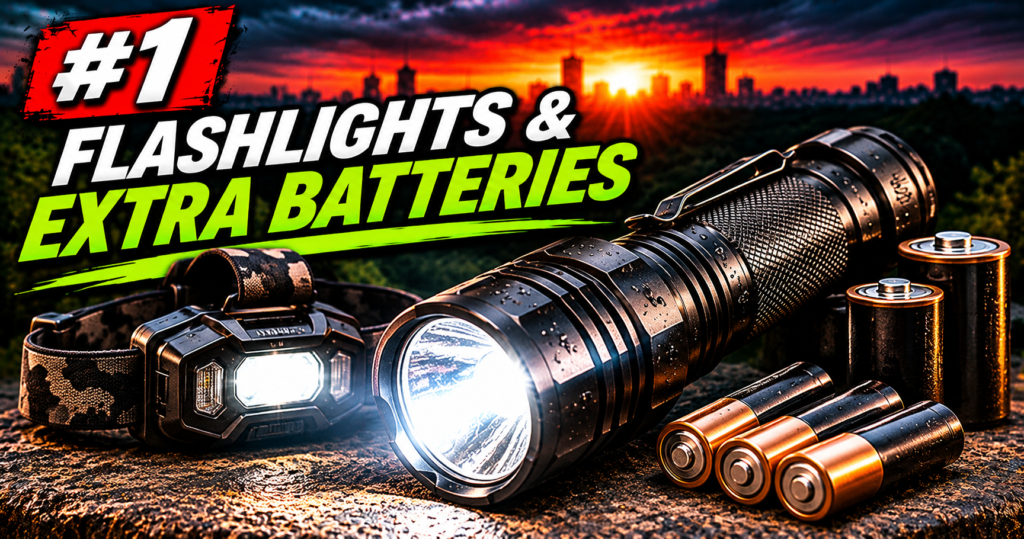
1. Flashlights and Extra Batteries
Let’s start with something simple: being able to see.
You don’t need to spend a fortune on some military-grade flashlight that can illuminate the moon. You need reliable lighting that works when you need it.
I’d keep at least two flashlights in the house, preferably LED models with decent battery life. Have spare batteries available, and make sure you actually check them every once in a while.
A headlamp is another excellent addition because it keeps your hands free. Trying to cook, repair something, or search through supplies while holding a flashlight in your mouth isn’t exactly peak survival strategy. And don’t forget a lantern for illuminating an entire room.
2. Portable Power Banks
Your phone becomes one of your most important tools during a power outage.
You can use it to receive emergency alerts, check weather conditions, contact family members, access offline maps, and get important information.
But there’s one problem: phones need electricity.
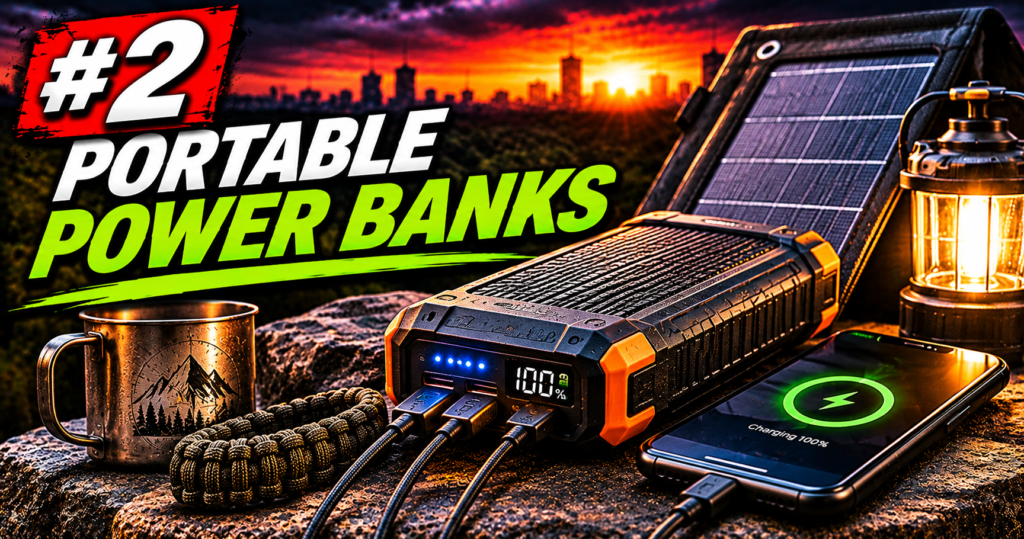
I’d keep at least two charged power banks available. A larger-capacity model can recharge your phone multiple times, depending on its capacity and your phone’s battery.
If you want to take things further, consider a portable power station that can recharge smaller electronics and operate certain low-power appliances.
Just remember to keep everything charged before an emergency happens.
A dead power bank is basically an expensive paperweight.
3. Emergency Drinking Water
Here’s something people tend to overlook until it’s too late: electricity and water systems can be connected.
Some homes depend on electric pumps for their water supply. Municipal systems may also depend on electrical infrastructure to treat and distribute water.
A power outage doesn’t automatically mean your water stops flowing, but certain disruptions can affect water availability or safety.
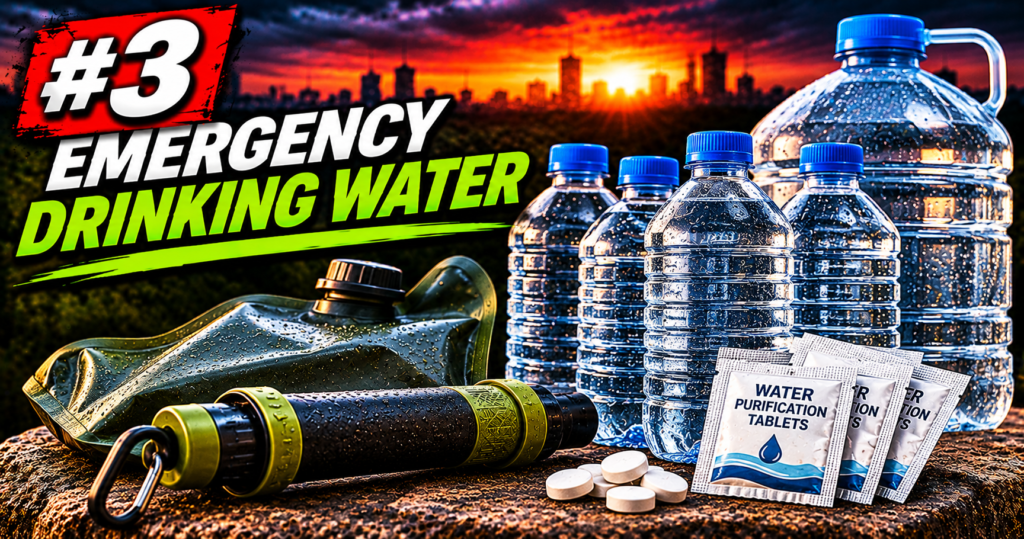
I’d keep bottled drinking water stored for emergencies.
A commonly recommended baseline is one gallon per person per day for at least three days. That covers drinking and basic sanitation needs, although additional water may be necessary depending on your climate, health, and household needs.
If you have pets, remember they need water too.
And no, waiting until the grocery store shelves look like a tornado passed through isn’t a water-storage strategy.

4. Nonperishable Food
Your refrigerator and freezer aren’t going to keep everything cold forever.
A refrigerator generally keeps food safely cold for about four hours if left unopened. A full freezer can maintain its temperature for approximately 48 hours if unopened, while a half-full freezer generally lasts about 24 hours.
After that, you need to pay attention to food safety.
This is why I’d keep a supply of shelf-stable food that doesn’t require refrigeration.
Think canned vegetables, canned meat, peanut butter, crackers, dried fruit, protein bars, and ready-to-eat meals.
Don’t forget a manual can opener.
Because discovering that you own 30 cans of food but absolutely no way to open them is the kind of comedy nobody needs during an emergency.
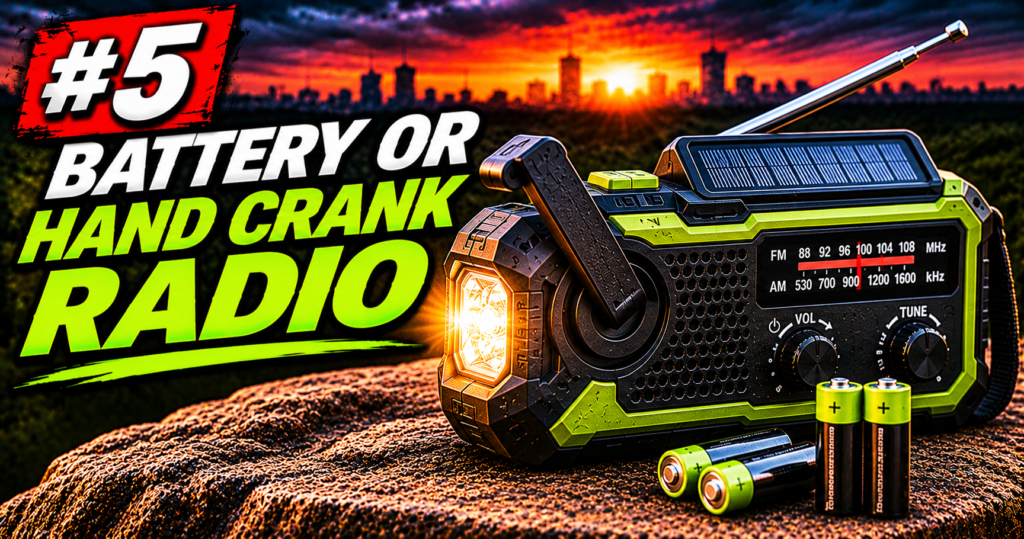
5. Battery-Powered or Hand-Crank Radio
When the internet goes down, your phone loses service, or local communications become unreliable, having another way to receive information becomes important.
A battery-powered or hand-crank emergency radio can help you receive weather reports, emergency broadcasts, and public safety announcements.
I’d look for a model with NOAA Weather Radio reception, AM/FM capability, and multiple power options.
Some models also include flashlights and USB charging features.
Just don’t assume the radio’s built-in hand crank will magically power every device you own. Those features are generally intended for limited emergency use.
Information is valuable during a disaster. Make sure you have more than one way to get it.
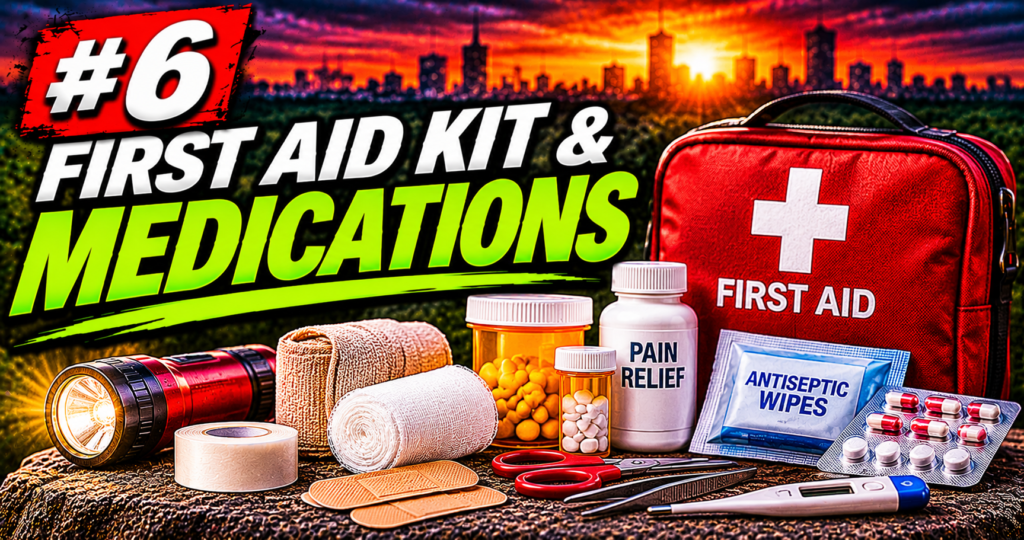
6. First Aid Kit and Essential Medications
A power outage doesn’t mean the rest of the world stops having accidents.
People still get cuts, burns, headaches, and all the other little problems that seem to show up at the worst possible time.
Keep a properly stocked first aid kit with bandages, gauze, antiseptic supplies, medical tape, gloves, and other basic necessities.
Also consider your household’s prescription medications and any medical equipment that requires electricity.
If someone depends on electrically powered medical equipment, plan for backup power and an alternative location where they can receive care if necessary.
Don’t wait until the power goes out to discover that your medical backup plan consists of crossing your fingers.
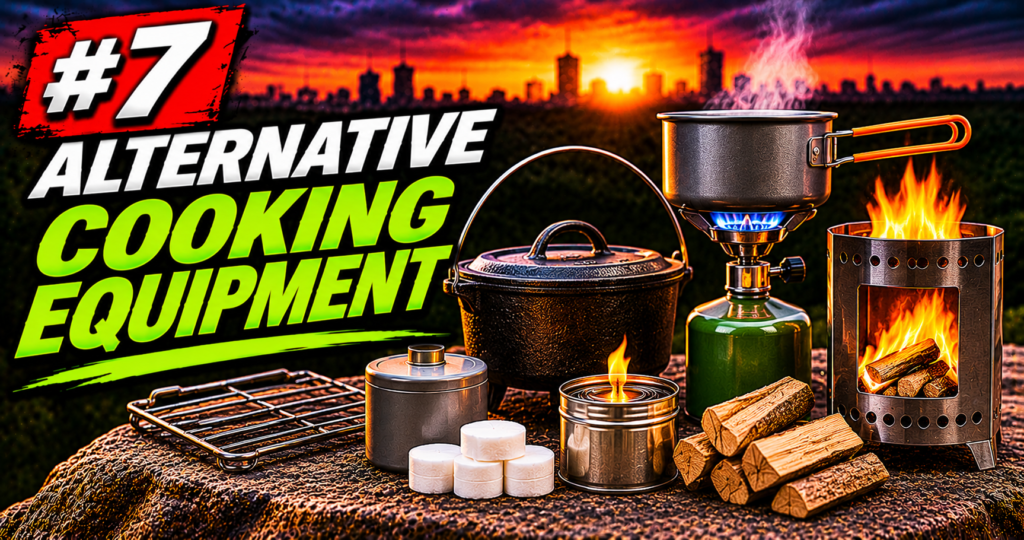
7. Alternative Cooking Equipment
So you’ve got food and water. Great.
But what happens when you actually want to prepare something?
A camping stove can be useful during an outage, but you need to understand the safety requirements.
Never operate propane camping stoves, charcoal grills, or other fuel-burning cooking equipment inside your home, garage, or enclosed space. Carbon monoxide is odorless, dangerous, and potentially deadly.
Use outdoor-rated equipment outside, away from doors, windows, and vents, following the manufacturer’s instructions.
Keep fuel stored safely and have a backup plan for meals that don’t require cooking.
Sometimes the smartest emergency meal is the one that doesn’t require firing anything up.

8. Warmth and Emergency Blankets
Losing electricity during summer is uncomfortable.
Losing electricity during winter can become dangerous.
Your heating system may stop working, depending on the type of system you have. If temperatures drop, you’ll want blankets, sleeping bags, warm clothing, and insulated bedding available.
Emergency blankets are inexpensive and take up very little storage space.
I’d also keep extra socks, gloves, and hats available.
And remember, staying warm isn’t just about piling on blankets. If you’re using a generator or alternative heating equipment, follow all safety instructions and keep fuel-burning equipment outside living spaces.
Don’t turn your house into a carbon monoxide experiment.
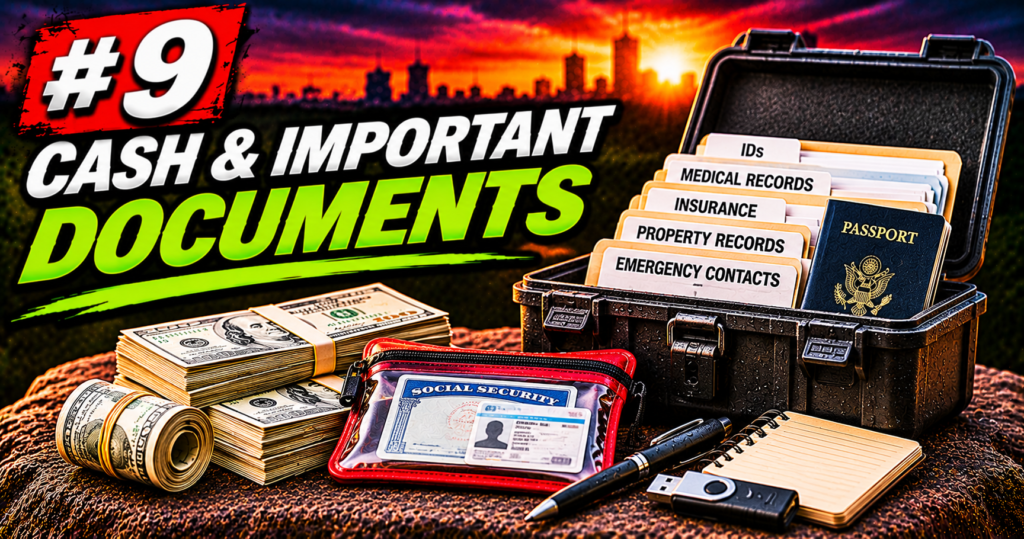
9. Cash and Important Documents
Here’s one people don’t always consider.
What happens if the power goes out and the local payment systems stop working?
Your debit card might be perfectly fine, but that doesn’t mean the store’s payment terminal is going to cooperate.
I’d keep some emergency cash in small denominations.
You should also have copies of important documents, insurance information, emergency contacts, and identification stored somewhere safe and accessible.
Consider keeping digital copies on a password-protected device or secure storage system, but don’t rely exclusively on electronics.
When the power is out, cash and paper can suddenly become very useful.
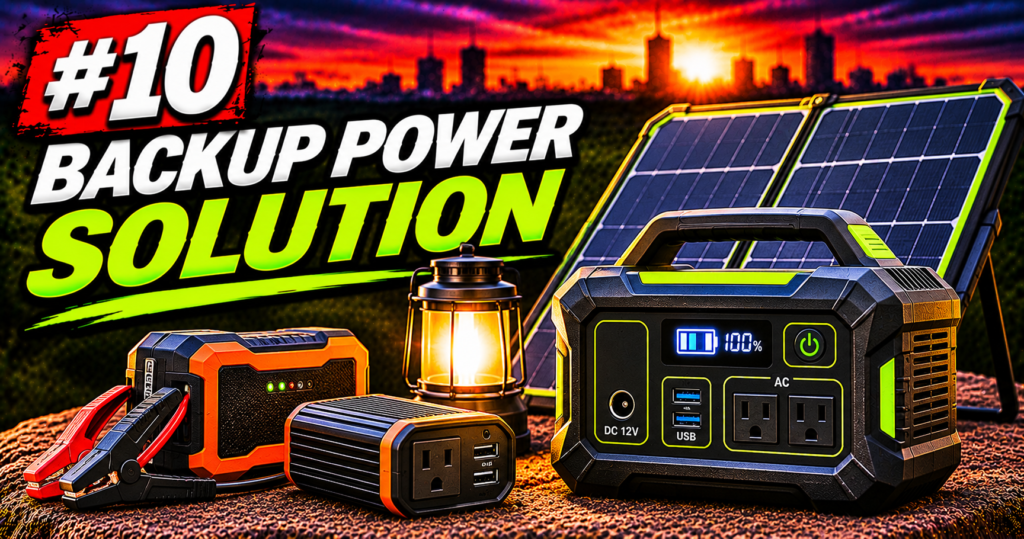
10. A Backup Power Solution
If you have the budget for it, this is one of the most useful upgrades you can make.
A portable power station, properly sized generator, or solar charging system can help keep essential equipment operating during an extended outage.
But understand what you’re buying.
A small power bank might recharge your phone several times. A larger portable power station might operate lights, charge electronics, and power certain small appliances. A generator can provide substantially more electricity, but it requires proper installation, fuel management, and safety precautions.
Never operate a portable generator inside your home, garage, basement, or near openings where exhaust can enter the building. Keep it outdoors at least 20 feet from doors, windows, and vents, following manufacturer guidance.
Install working carbon monoxide alarms on every level of your home and outside sleeping areas.
And don’t assume a generator can power your entire house just because the salesperson said it was powerful.
Know your electrical requirements before spending your money.