
WELCOME TO THE TRIBE
ADVERTISEMENT
ADVERTISEMENT
^ LISTEN TO THIS ARTICLE ON SPOTIFY & ITUNES by CLICK PLAY ABOVE ^
This article may contain affiliate links, which I do get a commission. I'll only recommend products that I've used and believe in.
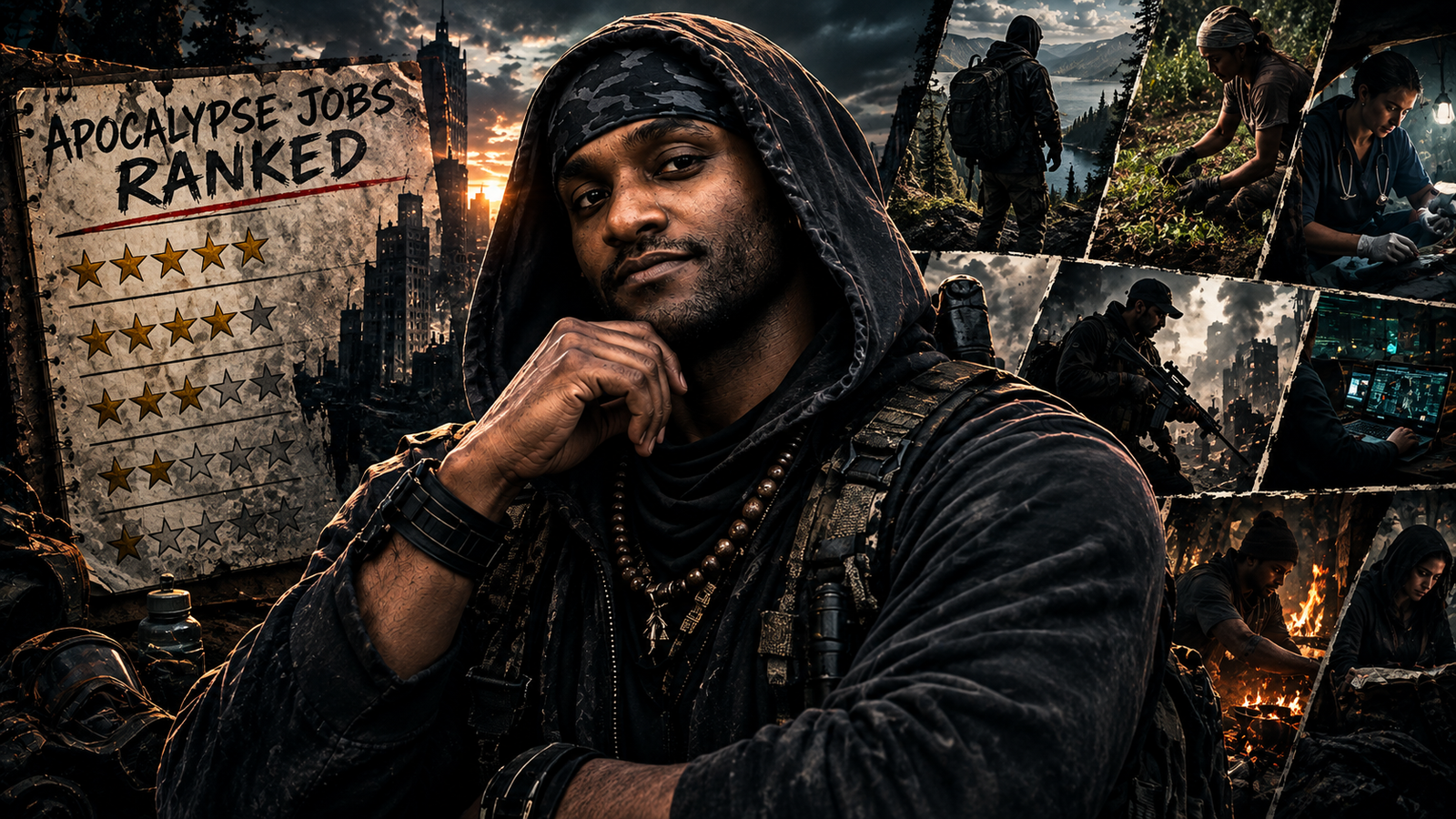
APOCALYPSE JOBS RANKED: WHAT JOBS ARE MOST IMPORTANT
These Are Them Most Important Skills During The Apocalypse
Everybody has a plan for the apocalypse until you ask them what they are actually bringing to the table.
Walk into any prepper forum, tactical shooting range, or survivalist subreddit, and you will see the same archetype: the “Wasteland Alpha.” This individual owns three different plate carriers, a dozen customized rifles with optics that cost more than their mortgage, thousands of rounds of ammunition, and enough camouflage clothing to blend into a military base. They genuinely believe that when the world ends, their ability to shoot tight groups at a hundred yards on a sunny Sunday afternoon automatically punches their ticket to the leadership table.
But here is the harsh reality of a systemic collapse: the system stops doing things for you.
When the grocery store shelves stay bare, the water stops flowing from the tap, and the local pharmacy locks its doors for good, survival shifts from a cinema-style shootout to an unglamorous, grueling game of daily resource management. Calories, basic infections, sudden dental decay, and simple exposure to the elements will kill far more people than marauders or zombies ever will.
In this new world, your modern net worth, your fancy corporate job title, and your social media follower count mean absolutely nothing. Society resets to a brutal, pragmatic Skills Economy. Your value to a community is boiled down to one simple, terrifying question: What can you actually do when nobody else can do it for you?
To remove emotion, ego, and action-movie bravado from this draft, we evaluate every single pre-apocalypse profession against five rigid, mathematical pillars of survival utility:
- Scarcity: How rare is this person and their specific knowledge base?
- Difficulty to Replace: Can you train a regular person to do this job in a weekend, or does it take a decade of intense study and trial?
- Frequency of Use: Is this skill required every single day to keep people breathing, or is it only useful during specific, occasional crises?
- Consequence of Absence: What happens to the group if absolutely nobody has this skill? Does the camp collapse into disease and starvation?
- Versatility: Can this person solve problems across multiple domains, or are they a one-trick pony?
Using these pillars, we have built the definitive post-apocalyptic job draft. Let’s look at who actually matters when the world ends, ranked sequentially from the absolute highest-value assets down to the foundational workforce.
⭐️⭐️⭐️⭐️⭐️ 5 Stars: The Multi-Domain Specialist (The Apex Asset)
The Roles
Wilderness survival specialists, deep-woods homesteaders, and primitive survival experts.
The Reality Check
The 5-star tier is the rarest find in the post-apocalyptic draft. It is crucial to understand that a 5-star rating is not a measure of social prestige or a fancy title—it is a measure of extreme capability breadth and adaptability.
A 5-star survival specialist is not necessarily the absolute best surgeon on earth, nor are they a world-champion sniper. They are elite because they can walk directly into a completely chaotic, unfamiliar environment, assess the immediate threats, and pivot across multiple domains to solve whatever problem is about to kill the group first. They are an entire survival ecosystem wrapped up in a single human being.
The Post-Collapse Value
When the modern grid vanishes, the wilderness ceases to be a weekend vacation spot and becomes a harsh, unforgiving home. A true survival specialist thrives here because they bridge the gap between every single tier on this list.
- The Wild is Their Hospital: They have a strong foundation in intermediate wilderness first aid. They understand how to stabilize a broken bone with improvised materials, treat exposure, and identify natural, wild remedies and antiseptics when the pharmaceutical cabinets are completely empty.
-
- Silent, Multi-Threat Sustenance: While a gunfighter needs loud, finite ammunition to defend themselves or hunt, a survival specialist understands quiet, sustainable harvesting. They know how to build primitive traps, layout snare lines, fish with improvised hand-lines, and track small to medium game using quiet tools like bows, slingshots, or blowguns. They harvest food without alerting nearby hostiles to the camp’s location.
-
- Total Environmental Autonomy: They possess advanced land navigation skills, understanding how to read terrain, track weather systems, find north without a compass, and map out safe scouting routes. They know how to harvest water from seemingly dry landscapes and purify it using primitive fire-and-stone techniques.
A 5-star specialist acts as the ultimate force multiplier. They don’t just survive on their own; they elevate the capability of every tier below them, transforming an unorganized group of panicked survivors into a highly efficient, self-sustaining unit.
⭐️⭐️⭐️⭐️ 4 Stars: The Critical Specialist (The Pillars of Society)
The Roles
Trauma nurses, general practitioners, dentists, electricians, plumbers, diesel mechanics, structural engineers, traditional farmers, and blacksmiths/welders.
The Reality Check
These are the rare, highly specialized professionals whose presence dictates whether your community builds a thriving new village or slowly dies out from disease, exposure, and structural collapse. If a community lacks a 4-star specialist, the consequence of absence is almost immediately catastrophic. You can live without a gunfighter for months; you cannot live without clean water or basic medical intervention for long.
The Post-Collapse Value
The value of these individuals stems from the fact that their skills take an immense amount of time to develop, require deep technical understanding, and absolutely cannot be faked by reading a single pamphlet.
- The Medical Bracket (Doctors and Nurses): In a world without sterile hospitals and pharmaceutical supply chains, a minor scrape from a rusty nail or a deep cut from chopping wood can turn into a fatal case of blood poisoning within days. A trauma nurse or doctor understands triage, infection control, wound management, and basic pharmacology. They are the only shield protecting your labor force from invisible killers like bacteria.
-
- The Sleeper Pick (The Dentist): People often laugh at putting dentists at the very top tier until they experience a severe dental abscess in a world without emergency care. A rotting tooth or a deep nerve infection causes pain so debilitating that it can render your strongest guard entirely useless. Left untreated, a severe dental infection can travel to the brain or heart, causing sepsis and death. A dentist with manual tools is an absolute godsend.
-
- The Infrastructure Bracket (Plumbers and Electricians): Waterborne diseases like cholera and dysentery have wiped out more historical populations than weapons ever did. A skilled plumber understands how to route clean water, build gravity-fed filtration systems, and safely isolate human waste away from the camp. Electricians and mechanics keep generators running, patch together solar arrays, and keep scavenged vehicles operational long after gas stations go dark.
⭐️⭐️⭐️ 3 Stars: The Skilled Specialist (The Sustenance Providers)
The Roles
Hunters, fishermen, professional cooks, school teachers, urban gardeners, radio hobbyists (HAM operators), and logistics coordinates.
The Reality Check
The 3-star tier marks the shift from immediate, panicked survival to long-term community sustainability. These roles occupy the middle tier because their skills are productive rather than reactive. They actively bring assets, calories, and order into the camp on a quiet, mundane Tuesday afternoon when no one is attacking.
The Post-Collapse Value
Unlike pulling a trigger, you cannot learn how to be a successful, consistent hunter or fisherman in a single weekend afternoon. If you send a “gun guy” into the woods to hunt, he will likely stomp around loudly, freeze, scare away every animal within five miles, and come back empty-handed.
- Hunters and Fishermen: These individuals bring an intimate understanding of animal behavior, seasonal migration patterns, wind direction, tracking, and stealth. More importantly, they understand field dressing and processing. Killing an animal is only 10% of the battle; knowing how to clean, skin, and preserve meat without a refrigerator is what prevents a community from dying of horrific food poisoning.
-
- Cooks and Gardeners: A professional cook understands food sanitation, macro-nutrition, and how to stretch minimal ingredients to feed a crowd. Combined with an urban gardener or small-scale forager who knows which local weeds are edible and which are toxic, this team ensures that the community’s baseline nutrition stays intact.
-
- Teachers and Radio Techs: Mental sustainability matters. Teachers preserve human knowledge, keep children safe and occupied, and maintain a sense of civilized normalcy so adults can work. Radio technicians keep the community connected to the outside world, scanning airwaves for signs of other safe zones or incoming threats.
⭐️⭐️ 2 Stars: The Basic Specialist (The Overrated Warrior)
The Roles
Pure gun enthusiasts, martial artists, basic security guards, asset managers, corporate lawyers, and accountants.
The Reality Check
This is where the “tough guys” traditionally catch feelings. The 2-star category exposes the greatest myth of modern survival pop culture: that being dangerous is the same thing as being indispensable.
Consider the classic gunfighter or tactical enthusiast. They can clear a room, manage recoil, and quote military doctrine. But let’s look at the math: if your community isn’t actively engaged in a firefight today, what is that pure gunfighter doing? They are sitting in the corner, drinking your purified water, eating your smoked meat, and waiting for an enemy to show up. They are a purely reactive asset that actively consumes precious resources without producing a single calorie. A gun cannot repair a leaky roof, cure a bacterial infection, or find clean water.
The Post-Collapse Value
Combat skills are highly valuable when the situation requires armed force. However, the true goal of a smart survival community is to avoid confrontation entirely through stealth, camouflage, and heavy fortification. Fighting burns ammunition, creates massive noise that attracts more danger, and risks injuries that your medical team may not be able to treat.
Furthermore, basic firearms proficiency is highly teachable. You do not need twenty years of deep-woods mastery to teach a 1-star General Contributor how to load, aim, clear a malfunction, and accurately fire a rifle at a defensive wall. Because the skill can be taught relatively quickly to anyone with steady hands, the pure gunfighter is highly replaceable. If a specialist only knows how to navigate modern bureaucracy or pull a trigger, they cap out at 2 stars. The problem isn’t the gun—the problem is being only a gunfighter.
⭐️ 1 Star: The General Contributor (The Foundation)
The Roles
Office workers, retail staff, baristas, corporate middle managers, students, and general city dwellers without highly technical backgrounds.
The Reality Check
In many fictional depictions of the end of the world, people without specialized skills are dismissed as “dead weight” or liabilities. Let’s troll the movie tropes for a second: a community consisting solely of five elite, hyper-specialized operators will quickly collapse because they are far too busy arguing over who gets to hold the binoculars to pull guard shifts, carry firewood, or wash their own socks.
One-star does not mean worthless; it means foundational.
The Post-Collapse Value
The General Contributor is the bedrock of the camp’s survival. While they might not know how to perform an emergency appendectomy or build a solar micro-grid on day one, they possess the most valuable trait in the wasteland: a blank slate and a willingness to learn.
- The Grunt Work: A community requires an immense amount of daily physical labor. Someone needs to haul water from the river, chop firewood, wash clothes without washing machines, dig sanitation trenches, and clear rubble. If you think a trauma surgeon or a 5-star survival specialist is going to spend 10 hours a day digging a latrine line, you’re dreaming.
-
- The Assistant Class: High-tier specialists cannot work efficiently without helpers. A 1-star survivor can act as a crucial apprentice—tending the soil for a farmer, prepping bandages for a nurse, or holding flashlight beams and heavy parts for a mechanic.
-
- Security and Sight: Basic perimeter guard duty does not require a Special Forces operator; it requires alert eyes, a radio, and a reliable person who won’t fall asleep while standing watch in the freezing rain.
The General Contributor represents the largest pool of survivors, and their absolute necessity in numbers makes them the true engine of camp survival.
The Post-Apocalyptic Master Skill Index
To visualize how the new world order evaluates human capital, review this master breakdown of where common professions land when the lights go out for good:
| Rating | Profession / Skill | Primary Survival Domain | Key Asset Delivered |
|---|---|---|---|
| ⭐️⭐️⭐️⭐️⭐️ | Survival Specialist | Adaptability & Multi-Sustenance | Force multiplication, scouting, primitive resource generation. |
| ⭐️⭐️⭐️⭐️ | Trauma Nurse / Doctor | Advanced Healthcare | Infection control, wound triage, community longevity. |
| ⭐️⭐️⭐️⭐️ | Dentist | Oral Surgery & Infection Prevention | Eradicates debilitating pain and sepsis from dental decay. |
| ⭐️⭐️⭐️⭐️ | Plumber / Sanitation Engineer | Water Security & Waste Management | Prevents deadly waterborne epidemics (Cholera, Dysentery). |
| ⭐️⭐️⭐️⭐️ | Electrician / Solar Tech | Micro-Grid Power Generation | Restores basic lighting, communications, and power tools. |
| ⭐️⭐️⭐️⭐️ | Diesel Mechanic / Machinist | Mechanical Restoration | Repairs engines, fabricates broken parts, keeps vehicles moving. |
| ⭐️⭐️⭐️⭐️ | Traditional Farmer / Vet | Agriculture & Livestock | Large-scale food production and animal husbandry. |
| ⭐️⭐️⭐️ | Hunter / Fisherman | Calorie Procurement | Tracks, harvests, and field-processes daily wild proteins. |
| ⭐️⭐️⭐️ | Professional Cook / Baker | Food Preservation & Sanitation | Maximizes food shelf-life, rations, and camp morale. |
| ⭐️⭐️⭐️ | HAM Radio Operator | Long-Range Communications | Gathers regional intelligence, monitors weather, finds survivors. |
| ⭐️⭐️⭐️ | School Teacher | Knowledge Preservation | Educates youth, maintains psychological structure and order. |
| ⭐️⭐️ | Basic Gun Enthusiast | Static Defensive Firepower | Provides defensive line security; highly replaceable/teachable. |
| ⭐️⭐️ | Accountant / Logician | Resource Allocation | Tracks supply burn-rates (Requires immediate manual pivot). |
| ⭐️ | General Laborer / Citizen | General Labor & Apprenticeship | Executes heavy lifting, camp construction, and learns new trades. |
Final Analysis: Upgrading Your Value Today
The ultimate takeaway of the Post-Apocalyptic Skills Economy is simple: do not let your survival capability be defined by a single tool.
If your entire emergency plan rests on the fact that you own a firearm and know how to use it, you are setting yourself up to be a 2-star asset who is completely dependent on others to feed you, heal you, and clean your water. True survival isn’t about being the loudest, toughest, or most heavily armed person in the room. It is about your personal level of autonomy and your ability to bring tangible, daily life-support to the people around you.
If you look at this list and realize you are currently sitting at a 1-star or 2-star level, do not panic. The grid is still up, the water is still running, and human knowledge is completely accessible. You can upgrade your value today:
- Take an intermediate first-aid or wilderness first responder (WFR) course.
-
- Learn how to grow a basic garden or identify five edible wild plants native to your immediate local area.
-
- Spend time learning how to navigate with a physical topographic map and a compass rather than relying entirely on your smartphone’s GPS.
When the system stops working, the fantasy of the ultimate lone-wolf badass disappears. What remains is a community of people looking at each other, trying to figure out how to make it to next week. Make sure that when that day comes, you have a skill that makes you completely indispensable.
FOLLOW ON SPOTIFY
GET THE URBAN WARRIOR SURVIVAL MAGAZINE FREE
RELATED POST


Social Networks
- B.Roc Survival Podcast
- Discord
- Patreon
- Youtube
Links List
B.Roc Survival Inc.
All rights reserved
Tagged Survival Tips